
Nishat Anjum
The Journey Begins with a Bottle
Imagine buying a bottle of mineral water on a hot afternoon in Dhaka. You finish the water, put the empty bottle into a recycling bin, and walk away, believing you have done something good for the environment. But have you ever wondered what happens to that bottle after it leaves your hands? The journey of a plastic bottle is more complicated than we might think.
While some bottles are recycled into new products, others end up in landfills, rivers, drains, or open spaces. The recycling symbol on a bottle does not always guarantee that it will be recycled.
From the Bin to the Streets
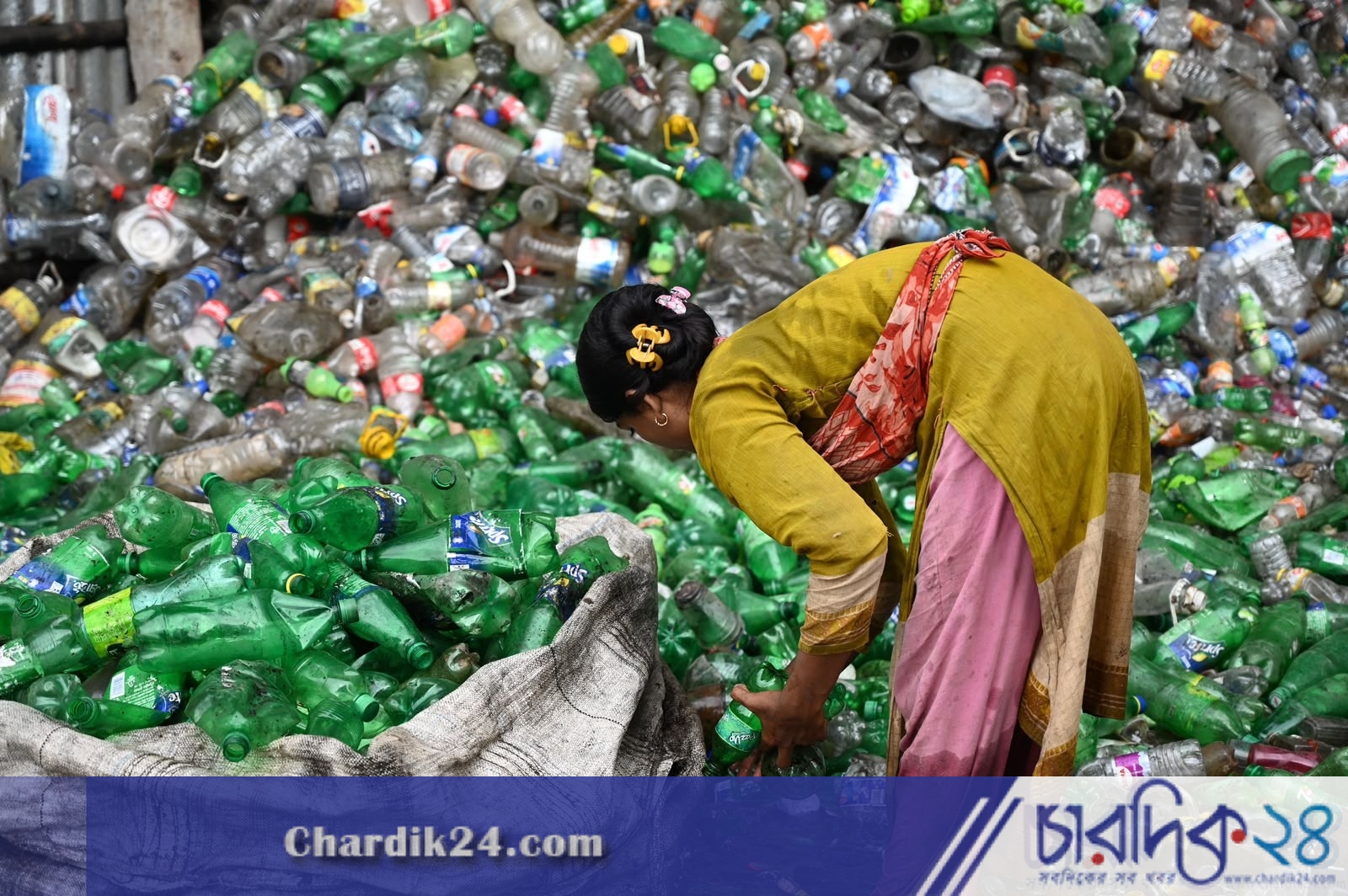
After being thrown away, a plastic bottle may be collected by waste collectors or informal recyclers. These workers are often seen searching through rubbish for plastic, paper, metal and other materials that can be sold.
In Bangladesh, informal waste pickers play an important role in collecting recyclable materials. They often work in difficult conditions, facing health risks, low incomes, and social discrimination. Yet their work helps recover valuable plastic that might otherwise become waste.
The People Behind Recycling
When we talk about recycling, we often focus on machines, factories and environmental campaigns. But behind the process are thousands of workers whose contributions are frequently overlooked.
Informal recyclers help keep plastic out of the environment, but they rarely receive the recognition they deserve. Many work without protective gloves, masks, or access to proper sanitation. They may also receive very little money for the materials they collect.
Their work raises an important question: Can recycling truly be called environmentally friendly if the people doing much of the work remain unsafe and underpaid?
A better recycling system must protect these workers, provide fair payment, and recognise their contribution to environmental protection.
The Truth About Greenwashing
Many companies advertise their products as eco-friendly or recyclable. Their packaging may carry recycling symbols, and their advertisements may promise a greener future. However, such claims do not always tell the whole story.
This is where greenwashing becomes a concern. Greenwashing occurs when a company makes its products or environmental efforts appear more sustainable than they really are.
A company may promote a plastic bottle as recyclable without explaining whether suitable collection and recycling facilities are widely available. Consumers may believe that throwing the bottle into a recycling bin solves the problem, even though the bottle might never be recycled.
Recycling is important, but it cannot solve the entire plastic pollution crisis. Producing less unnecessary plastic, reusing containers, and improving waste management are also essential.
Can One Bottle Make a Difference?
Let’s return to our bottle. After passing through the hands of waste collectors and recycling workers, it finally reaches a recycling facility. There, it is processed into small plastic flakes or pellets that may become part of another product.
Perhaps it will become a new container, a household item, or a piece of clothing. Its journey may continue in another form. But this outcome is not guaranteed, and recycling the same plastic repeatedly can become more difficult because its quality may decrease.
The fate of this bottle depends on many factors: how it is designed, whether it is collected separately, how clean it is, and whether a market exists for recycled plastic.
A Responsibility Beyond the Recycling Bin
The journey of a plastic bottle reveals that recycling is not simply about throwing something into the correct bin. It is about an entire system involving consumers, businesses, waste collectors, recycling facilities and government policies.
Consumers can help by reducing single-use plastic, reusing suitable containers, and separating recyclable waste. Companies must take greater responsibility for the packaging they produce and avoid misleading environmental claims.
Governments should improve waste collection, support recycling infrastructure, and protect informal waste workers.
One bottle may seem insignificant, but millions of bottles create a global problem.
The real question is not just whether plastic can be recycled, but whether we are building a system that makes recycling effective, honest and fair for everyone.


